Modern dentistry has developed 3 types of dental implants, best known for their long endurance, high success rate and overall reliability.
Depending on your circumstances, one type might be better than the other. The decision is yours, but we advise you to pay careful attention to your dentist’s recommendations:
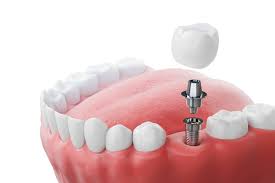
1. Endosteal Implants
The world ‘endosteal’ means ‘inside the bone’. This refers to its integration inside the jawbone, working as a natural root for prosthetic crowns. Endosteal implants are the preferred option for patients having enough jawbone to hold them in place.
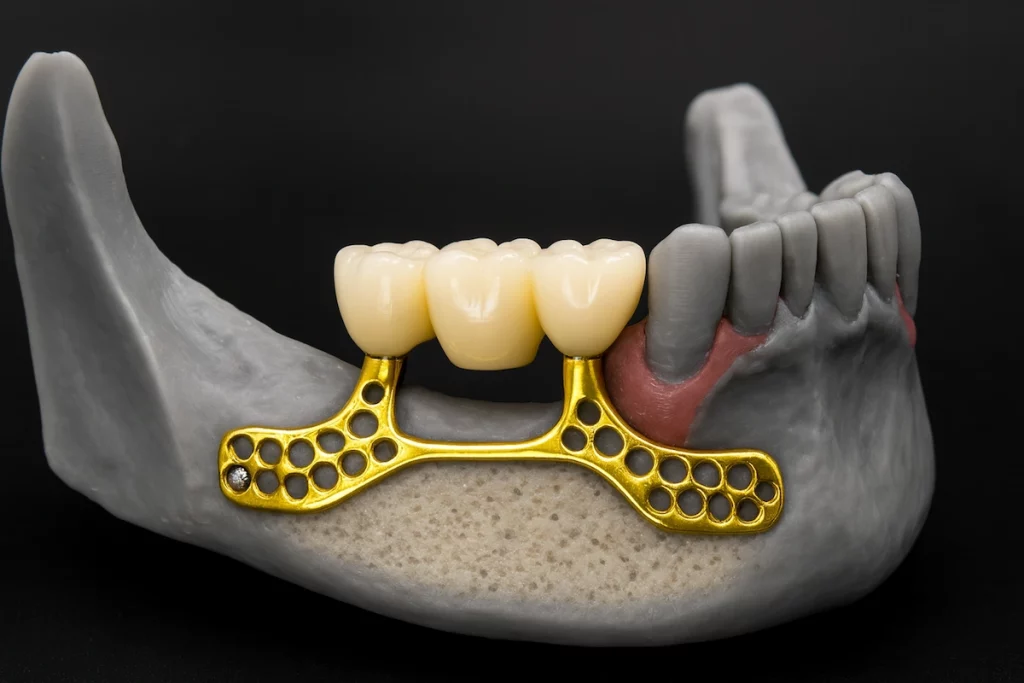
2. Subperiosteal Implants
Subperiosteal implants are the best alternative for patients lacking enough jawbone to ensure the solidity of endosteal. Subperiosteal implants are dug in the middle layer between the bone and the mucous membrane.
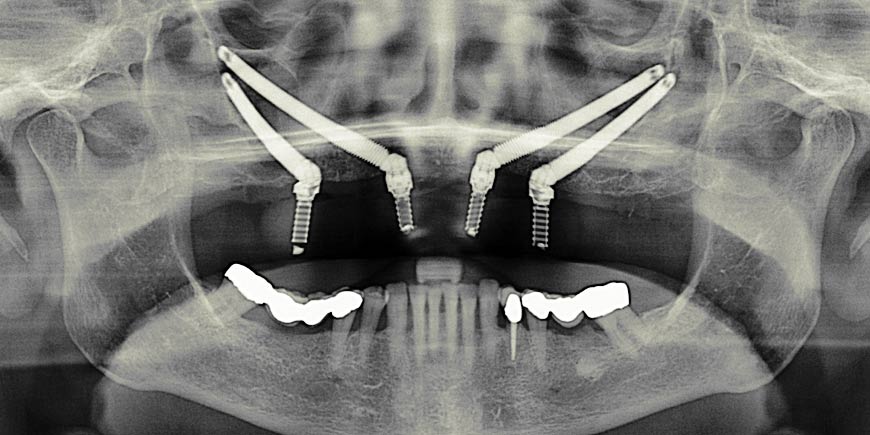
3. Zygomatic Implants
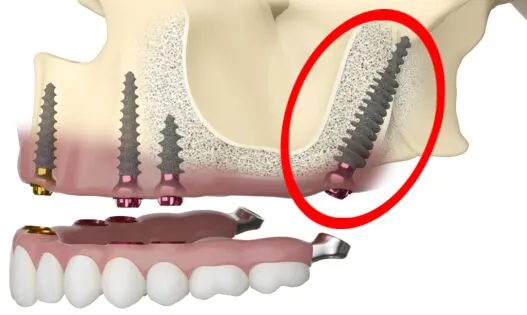
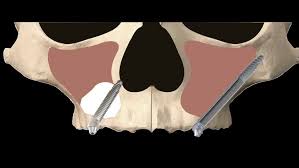
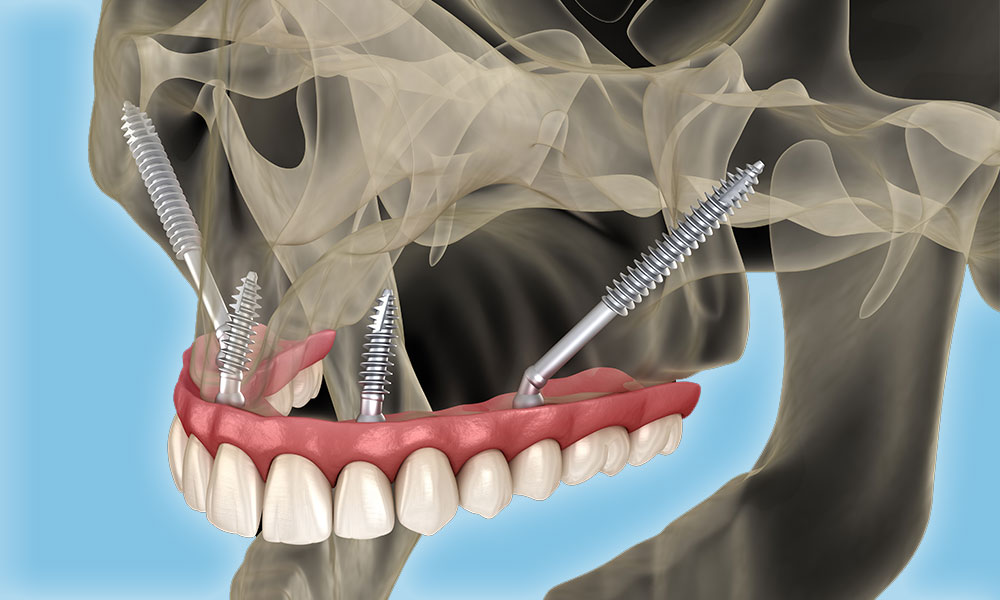
Zygomatic implants are a subtype of endosteal. They constitute another feasible alternative for patients lacking sufficient bone. This is because they are much longer than the standard endosteal and can be solidly implanted in the upper jaw bone (zygoma).
Dental Implant Full Mouth Possibilities
Patients wanting a full smile makeover don’t need one implant per missing tooth! It is completely unnecessary and would lead to avoidable excess costs.
Instead, you can opt for 2 options that provide more than enough solidity while minimizing the number of implants you require. This is the typical procedure everywhere in the world.
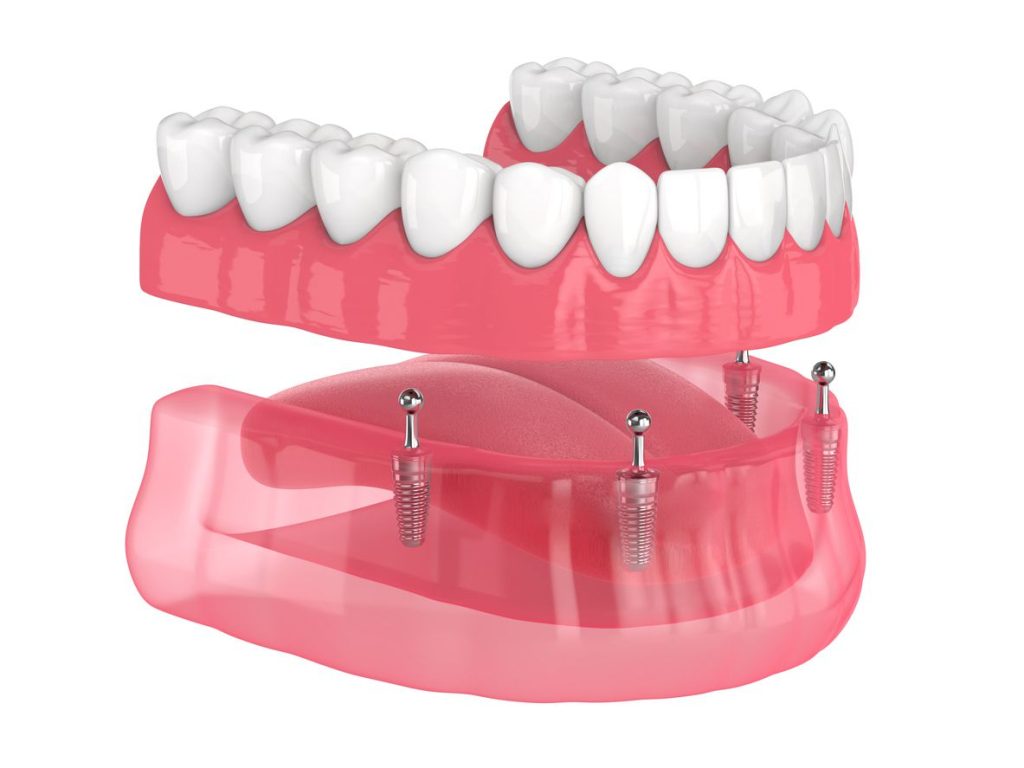
Implant-Supported Dentures
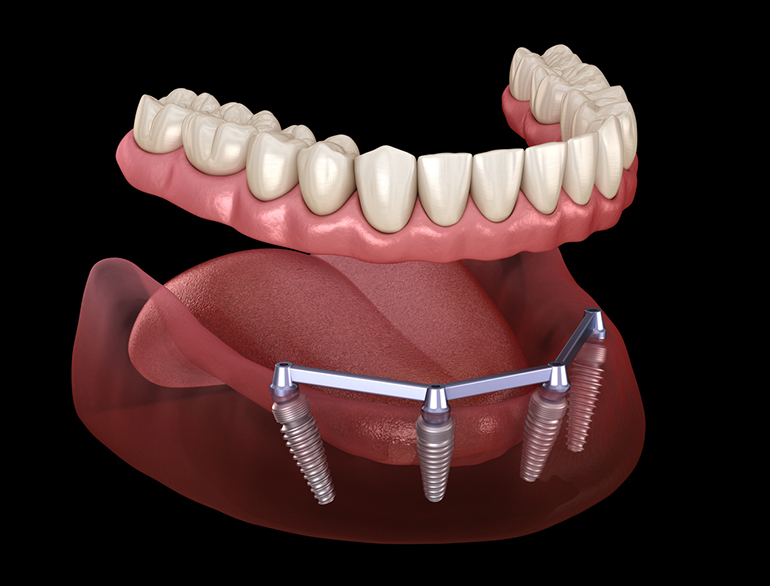
Implants can be used to solidly anchor dentures to the jaw. Implanted dentures allow for a series of advantages compared to traditional dentures: improved strength, greater comfort, speech function, chewing capacity and overall aesthetics.
Implant-Supported Bridges
Tooth implants can also serve as anchor for dental bridges, which are a row of prosthetic teeth. The most common types of bridges are:
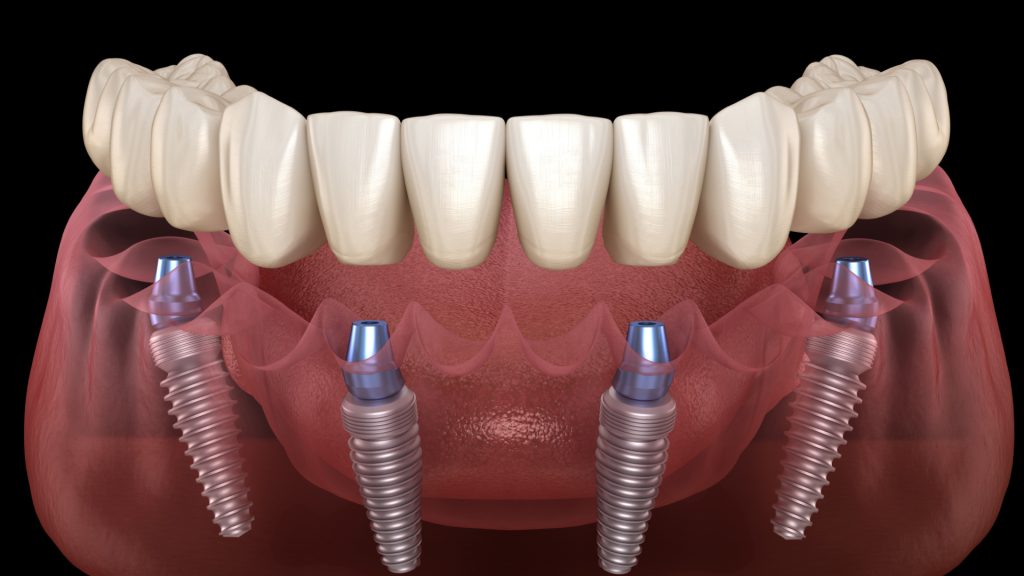
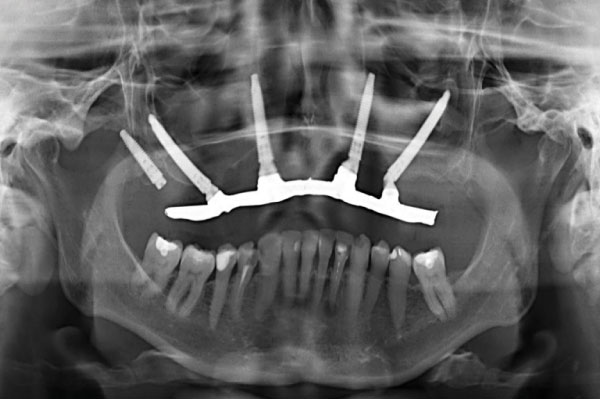
- All-on-4 dental implants: This refers to a bridge of prosthetic teeth anchored to a set of 4 implants, 2 on each side (right and left) of the upper or lower jaw.
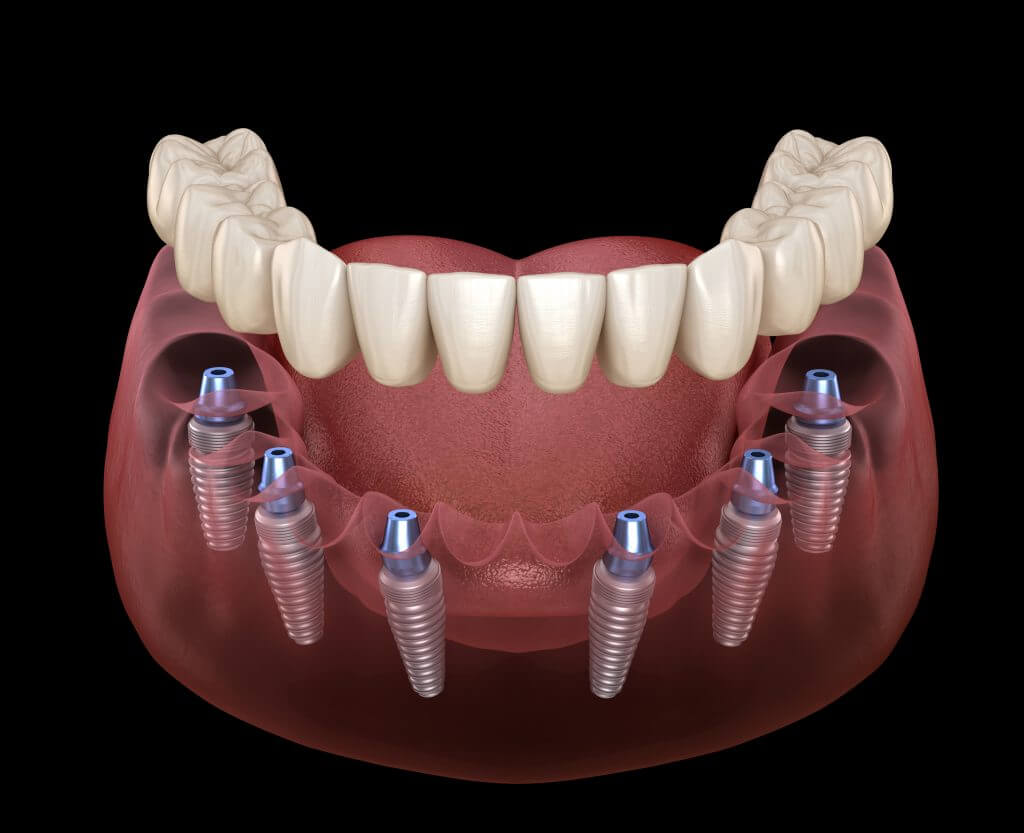
- All-on-6 dental implants: Patients desiring greater solidity can opt for 3 implants of each side of the upper and lower jaw, making it a total of 6.
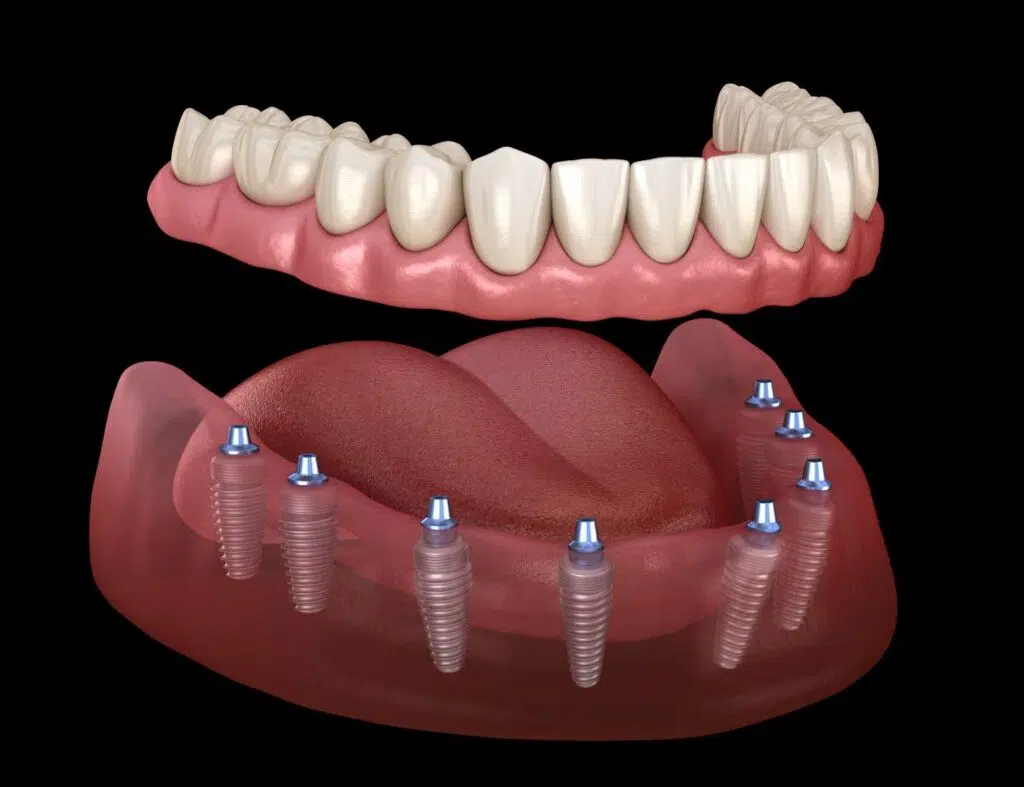
- All-on-8 dental implants: All-on-8 bridges allow for the greatest solidity and longevity, with 4 implants on each side of the lower and/or upper jaw.
- All-on-X dental implants: It refer to a representative, full-arch, and a healing process that allow the patient to use either the upper or lower jaw that comprises four to eight implants made of titanium or zirconia.
Introducing 3 Tooth Implant Shapes
Implants resemble screws to the point they are almost indistinguishable from them. The difference is they are highly sophisticated devices coming in different shapes to best adapt to the patient’s mouth topography.
The 3 different shapes of dental implants in Turkey are:
Tapered: Tapered are the most common shape and the ones most similar to natural tooth roots. Their surface is layered, which helps create stability and aesthetic end-results.
Cylindrical: The walls of cylindrical implants are smooth. This offers the advantage of creating a larger contact area with the bone, allowing for better osseointegration.
Spindle-Shaped: Spindle-shaped implants are a combination of the former 2 shapes. They are cylindrical with a tapered ending, allowing for strong holding and comfort.